
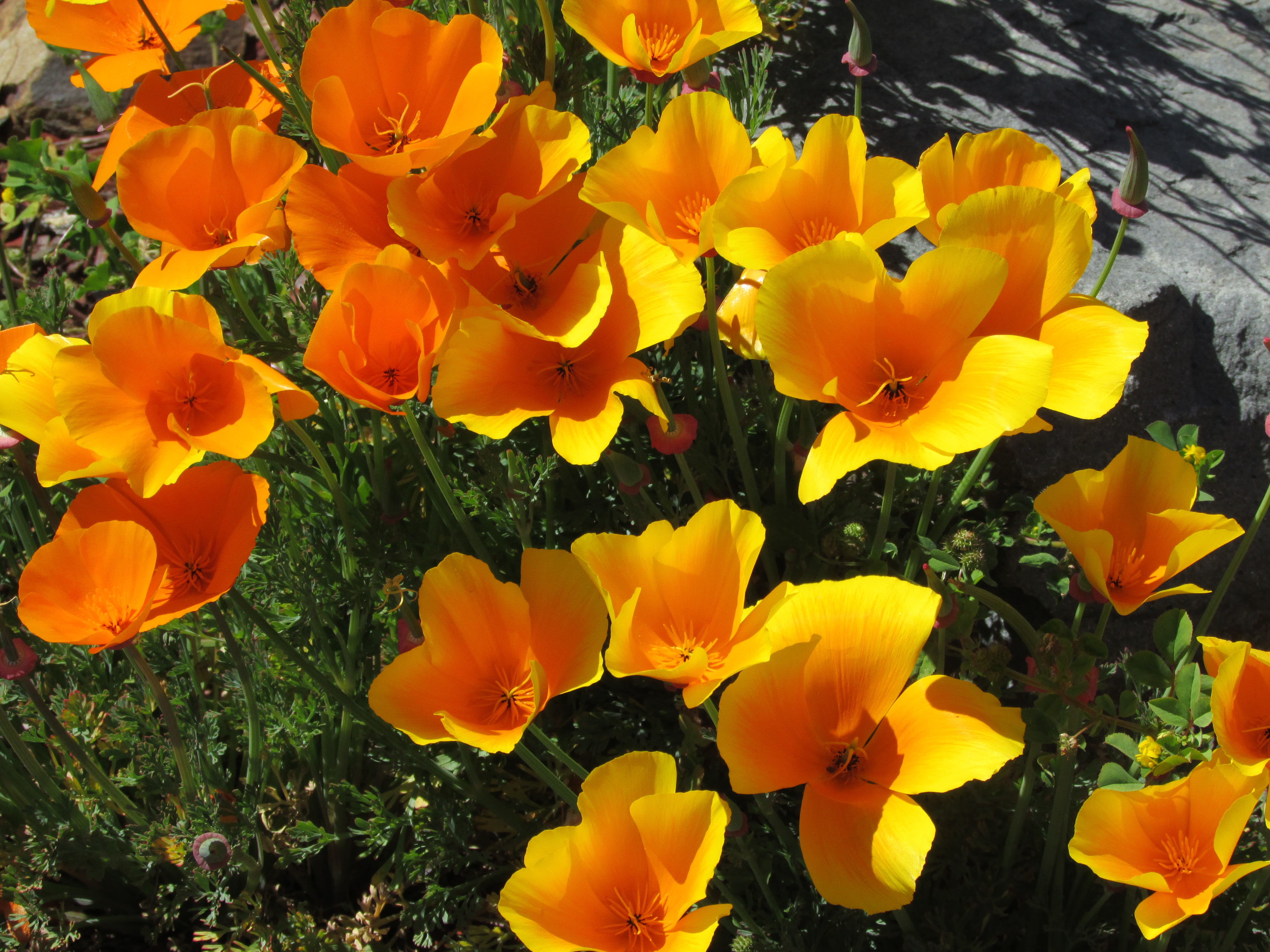
California Poppy
California Poppy
Great news, SMART rail car seats pass safety tests after changes, rail service from Santa Rosa to San Rafael still on schedule for 2015.
SMART rail car seats pass safety tests
By SEAN SCULLY
THE PRESS DEMOCRAT
Wednesday, April 17, 2013
http://www.pressdemocrat.com/article/20130417/ARTICLES/130419567/0/search

Douglas Iris, California native
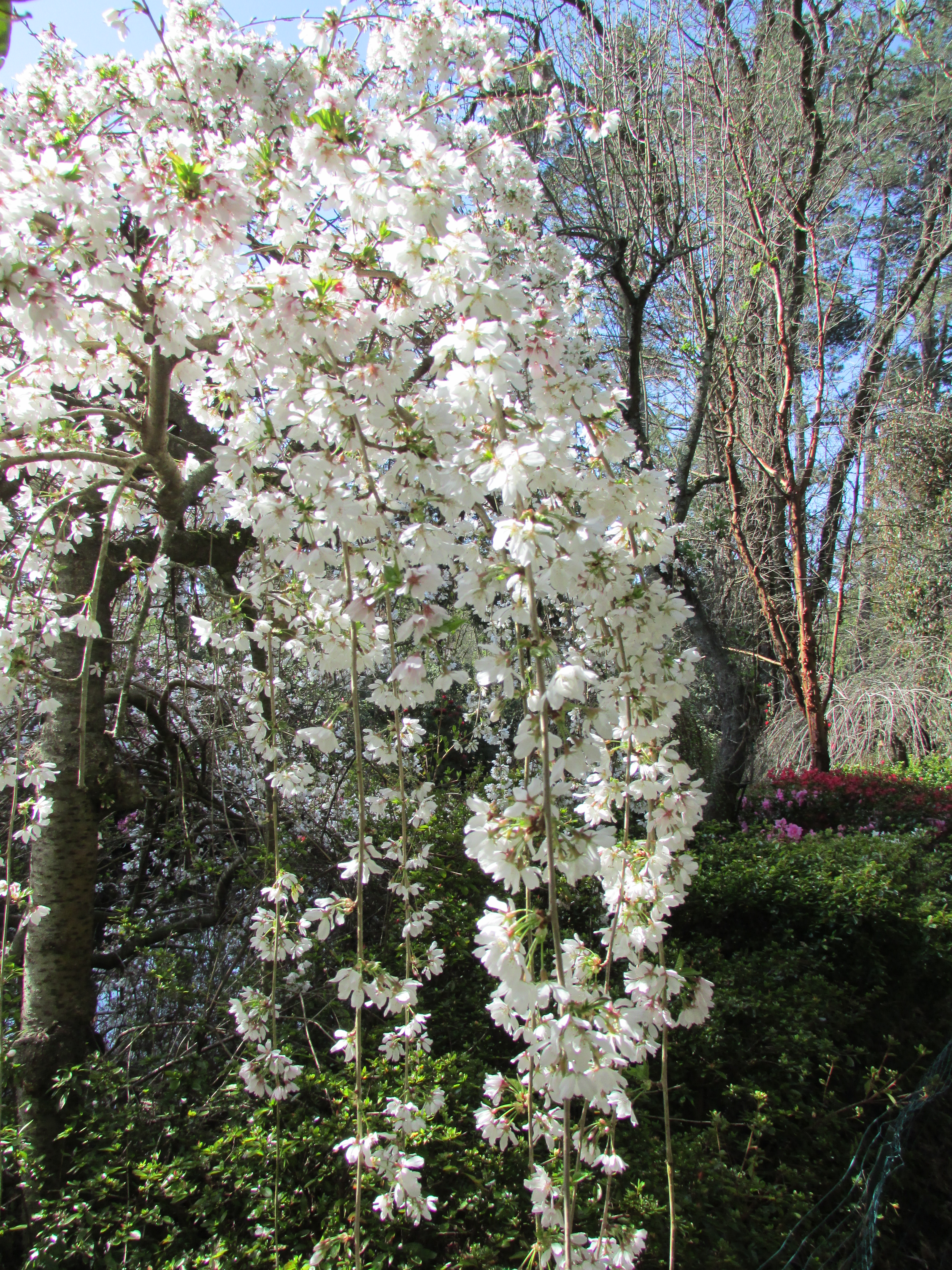
Snow Fountain Cherry (Prunus)

Japan 2006 “Sakura no Hanami”, 桜の花 見 cherry blossoms
 Spring season throughout Sonoma county is always a pleasant transformation to witness. The dramatic pink, white and purple color displays and profusion of blossoms accenting the city landscapes, parks, malls, residences, and restaurants in Santa Rosa, Petaluma and Sebastopol are simply beautiful. The visual association and clusters of flowering cherry blossom trees symbolize the awakening rebirth of new life, a fresh start with new beginnings each year and truly make me happy. I can’t help but smile.
Witnessing the return of these delicate canopies of color this season reminded me of a special journey I took to Kyoto Japan, 京都 日本 with my father seven years ago during the spring, 春 ‘haru’ of 2006. Our travel plans, robust sightseeing itinerary and journey focused on the experience and short lived transformation of “Sakura no Hanami”, 桜の花 見 ‘cherry blossom flower viewing up close, first hand in the imperial capitol and cultural heart of Japan. After careful planning, research, and charting historical years and comparisons of past peak seasons around Honshu island, we packed our bags, redeemed our United frequent flyer miles and headed off to Osaka Kansai KIX international airport to spend the first two weeks of March in Japan. My father joined me in San Francisco and we embarked on our quest to discover why this seasonal phenomenon is important and engrained in the hearts and souls of so many Japanese.
One of my favorite Japanese haiku expressions is ‘chitte koso sakura nari‘ ~ which translates to, It’s a cherry blossom, it falls when it must. There’s a sense of finality and uncontrollable natural force and mortality captured in this expressed moment. Digging in a bit deeper and connecting the dots, the soul of the sakura “the cherry blossom” is the soul of “bushido” (chivalry) and the heart of bushido is the heart of Japan. Haiku poems, Kabuki theater, art, music, food, sports, traditions, and holidays all incorporate this national theme and past time of cherry blossom viewing, reserving time to appreciate the grace, beauty and simplicity of nature’s transformation. Even our own National Capitol Mall and Tidal Basin in Washington DC, showcases famous cherry blossoms each spring at our most treasured historical monuments. 3,020 Yoshino cherry trees were originally donated in 1912, by the people of Japan as a gift of friendship. First Lady Helen Taft and the wife of the Japanese Ambassador Viscountess Chinda planted the first two cherry trees on the northern bank of the Tidal Basin a hundred years ago!
This annual season in Japan and bundled festivals are brief, magical and having an opportunity to observe the wave of delicate blossoms appear and disappear along their regional natural landscapes each year is unique. Starting in southern Kyushu, Shikoku, Honshu and up to northern Hokkaido within a few short weeks. Intense, dramatic, brief and significant, a must see experience in person.
We arrived in Osaka late afternoon, navigated our way to the Takaragaike Prince Hotel in Kyoto taking the “Haruka” express train from Kansai KIX station to Kyoto station, transferring into the subway to Karasuma Line, and ended up at”Kokusaikaikan” (Conference Hall) North. We got settled in and oriented with our home base, hotel headquarters for the first week in Kyoto. Our vacation strategy, to take day trips, venture and focus on significant sites, shrines, castles and gardens of interest in each specific regional area/prefectures in and around Kyoto, Nara, and Kobe. Then end our amazing journey at Mount Koya, “Koyasan” 高野山, and spend a couple days at a Shukubo active Buddhist monastery, the location where Shingon Buddhism was introduced to Japan in 805 by Kobo Daishi (aka Kukai).
The Kyoto grid is not that complicated, and I broke it down into four quadrants.
Central ~ 京都 Rakuchu *** Gion, Kyoto Station, Kitano, Shimogamo, & Nishijin
East ~ 京都 Rakuto *** Higashiyama Okazaki, Ginakakuji, Kiyomizu & Nanzenji
West ~ 京都 Rakusei *** Omuro, Kinkakuji Temple, Arashiyama, Sagano, & Uzumasa
South ~ 京都 Rakunan *** Uji & Fushimi
My latent conversational Japanese language skills kicked in after a couple days once I had a few sakes, 桜餅 mochi cakes, sushi rolls and endless bowls miso, soba and udon noodles in my system. Kanji, hiragana and katakana characters that I thought were forgotten from memory, resurfaced at various venues and street signs to my delight. My inner Ninja on cue and fueled with strong お茶 ‘ocha’ tea, ready to tackle the adventures of the day!
We spent the first couple days in central Rakuchu, and began at the Rengeo-in Temple 三十三間堂 Sanjusangen-do founded in 1164, famous for being Japan’s longest wooden structure and houses 1,001 statues of Kannon. The Nijo Castle, 二条城 ~ Shogun Tokugawa Ieyasu built the castle in 1603, the Ninomaru Palace includes two concentric rings of fortifications, a moat and high walls, and is famous for its squeaking ‘nightingale’ floorboards. The Kyoto Gosho Imperial Palace 京都 御所 is located in the center of Kyoto Gyoen (Kyoto Imperial Park), this impressive site is dramatic and huge. The palace is surrounded by a high walls and the existing structures were built around 1855 in the Heian-period architectural style, and was the primary residence of Japan’s Imperial Family until 1868. The Tojiin Temple, the tallest pagoda in Kyoto is also impressive and worth a stop in your busy sightseeing schedule. Each of these sites included amazing gardens and showcased old cherry trees bursting with exquisite blossoms in the courtyards and surrounding perimeters.
One of the highlights of the Rakuto area is Higashiyama 東山 , known as the Philosopher’s Path “Walk of Philosophy” 哲学の道 (Tetsugaku no michi). We started the day at the Heian-jingu Shrine 平安神宮 and cruised down the Okazaki Canal in a traditional ‘Jukkoku’ Japanese boat. All boat passengers were asked to lean over and duck down when the boat would go through and under the low historic bridges. The driver would adjust the manual roof top, providing the tourists 30 seconds to lay forward in the lap position to clear the bridge without incidents! Very entertaining. At the Heian Shrine, we walked through the exquisite manicured gardens and participated in a special cherry blossom tea ceremony in the ‘Shin-en tea room’. The blossoms at the Heian Shrine were just starting to open, so it wasn’t as spectacular as some of other areas in Kyoto that were already in full bloom. In the afternoon, we walked up to Nanzenji Temple 南禅寺 , then made our way along the Philosopher’s Path to Ginkakuji 銀閣寺(Silver Pavilion Temple) enjoying the shops, mochi cakes, and peaceful walkway reserved for reflection and cherry blossom viewing. Later that evening we also ventured into Gion located on the eastern bank of the Kamo-gawa River, and crossed the bridge onto Shijo-dori to see the Minami-za theater, Japan’s oldest Kabuki theater.
Oddly, each regional area in Kyoto has a distinct impression and atmosphere, which makes visiting so many temples and shrines interesting and not redundant.
In Rakusei we visited the Daitokuji temple complex大徳寺 , the center of Zen Buddhism in Northern Kyoto. We caught a short bus ride to Kinkakuji, the Golden Pavilion 金閣寺 which features the finest Sung Dynasty-style pond and became the prototype for Japanese waterfalls. From there, we walked west from Kinkakuji, and headed down to the serene rock garden of Ryoan-ji 龍安寺. The discovery of this tranquil temple, and layout quickly became my father’s favorite rock garden in Kyoto, and we spent extra time there to appreciate the spot. The recognizable platform provides a view of the fifteen rocks placed in the sea of raked sand and visitors come and go, keeping the space balanced. We walked a bit further through the garden to the Ninna-ji Temple, to see the famous Omuro-no-sakura multi-petal cherry trees around the pagoda. That afternoon, we took a taxi to South Western SAGANO 嵯峨野 and the Arashiyama 嵐 山 to visit the Tenru-ji temple 天竜寺 , koi pond and walk through the bamboo forest 竹 and local shrines. The views of the cherry blossoms around Arashiyama, the Oi river and Togetsukyo bridge 渡月橋 were impressive.
The following day we headed to Rakunan, and spent our time exploring Uji 宇治 and Fushimi 伏見. This was one of my favorite days of collective moments in Kyoto. My friend Satomi who lives in Osaka, joined us for the day and we visited the Uji river and Asagiri bridge, which is one of the three oldest bridges in Japan dating back to 646, and is written about in the Japanese novel, The Tale of Genji. We walked to the Uji Byodo-in Temple 平等院, one of Japan’s most famous temple buildings, proudly depicted on their 10¥ Yen coin. This temple features the most beautiful of Japan’s few remaining pure land gardens, and is the only surviving original example of Heian temple architecture. We toured Hoshokan museum exhibit and assortment of the temple’s treasures including the Phoenix, followed by a special lunch at the Tsuen Tea Shop, Japan’s oldest Tea Company since 1160. Twenty four generations of their family have been in the Tea Business for over 853 years. Now that’s what I call vocational, historical and family commitment! Unbelievable.
After lunch, we traveled back on the Keihan Railway to visit the Fushimi-Inari Shrine 伏見稲荷大社, walk through the Sakura-mon Gate 桜門 and make our way through the tunnel of thousands of Red-Orange torii gates up to the Go-Honden Shrine 御本殿. Being there and experiencing the surreal walk through the peaceful forest lined with Torii Shrine Gates was unbelievable. The hike to the top of the mountain didn’t really phase me, I was lost in the moment and it really didn’t seem hard or strenuous after a long day of sightseeing.
Satomi and my father were exhausted, but we each left there with different experiences, genuine moments of the over-stimulated day we shared in Uji and Fushimi. The memories are unique and extra special to each of us. I’ll update this posting and finish adding additional tales about the Shinkansen 新幹線 bullet train to Himeji Castle, deer park in Nara and experiencing Buddhism at Mt Koya in the next couple weeks.
Resources:
National Capitol Mall and Tidal Basin in Washington DC
http://dc.about.com/od/hoildaysseasonalevents/a/FAQsCherryTrees.htm
Kansai International Airport 関西国際空港
http://www.kansai-airport.or.jp/en/index.asp
Takaragaike Prince Hotel 京都宝ヶ池プリンスホテル
http://www.princehotels.com/en/kyoto/
Kyoto Gosho Imperial Palace 京都 御所
http://sankan.kunaicho.go.jp/english/guide/kyoto.html
Rengeo-in Temple 三十三間堂
http://www.jnto.go.jp/eng/location/spot/shritemp/rengeoin.html
Nijo Castle 二条城
http://www.japan-guide.com/e/e3918.html
Kinkakuji, the Golden Pavilion 金閣寺
http://www.japan-guide.com/e/e3908.html
Ryoan-ji 龍安寺
http://www.ryoanji.jp/smph/eng/
Byodo-in Temple 平等院
http://www.byodoin.or.jp/
Fushimi-Inari Shrine 伏見稲荷大社
http://inari.jp/
Heian-jingu Shrine 平安神宮
http://www.japan-guide.com/e/e3904.html
The flowers and gardens of Japan
By Florence Du Cane c 1906
Tale of Genji 源氏物語
By Murasaki Shikibu
http://www.taleofgenji.org/
Tsuen Tea Shop お茶の通園
http://www.tsuentea.com/engindex.htm
Mount Kōya 高野山 Kōya-san
http://en.wikipedia.org/wiki/Mount_K%C5%8Dya
Shojoshin-in Buddhist Temple 清浄心院
http://www.japaneseguesthouses.com/db/mount_koya/shojoshinin.htm
Interesting rail line developments were revealed at the Feb 20 , 2013 SMART Staff and public board meeting. Board Member Announcement section, general managers report; video presentation (4 minutes)
http://sonomamarintrain.granicus.com/MediaPlayer.php?view_id=2&clip_id=171&meta_id=2997
An unexpected proposal was introduced to connect SMART in Novato, at the Sonoma’ Infinity’ Raceway venue location. The raceway owners are promoting an event in June and will be bringing Amtrak service from downtown Sacramento to the doorstep of the raceway, leveraging existing railroad lines and infrastructure through Yolo -> Solano -> Napa -> Sonoma counties. The’ve expressed interest to connect this new rail hub into the Sonoma / Novato SMART rail service for future 2014-2015 events. This proposal has the potential of connecting Sonoma/ Marin counties to the Sacramento-SF bay area recreational and commuter Amtrak lines providing greater long term outreach and usage on public rail transit for commuters and businesses. Short term benefit, offering a much needed solution to the horrific vehicle gridlock and public safety issues on Hwy 37 during large events.
General Manager’s report from the February 2013 board meeting.

Cotati SMART Train Depot
The new SMART (Sonoma Marin Area Rail Transit) Cotati train station and future Transit Center will be located at East Cotati Avenue and Santero Way, a few blocks east of the Rancho Cotati Shopping Center, near Oliver’s Market. Cotati’s ground breaking ceremony started last Fall on October 22, 2012 and the designated property is located along the existing train tracks. The development site has an abandoned school district warehouse dwelling with 2013 -2014 plans for demolition, making way for new depot construction, parking and retail spaces.
This new strategic SMART hub is centrally located to serve the future transportation demands of nearby Sonoma State University and their growing student population, expanding local businesses, and is also situated on the main artery connecting the central downtown community. 1 of the 2 Cotati freeway exits, West Sierra Avenue along the 101 corridor between Rohnert Park and Petaluma also connects into East Cotati Avenue enhancing vehicle accessibility to the SMART train station. Cotati has a long history of train activity, and the original railroad depot was also located on East Cotati Avenue.
The city of Cotati promotes and maintains a comfortable small town atmosphere in Sonoma County and hosts the annual Cotati Accordion Festival every August. Interesting trivia, Cotati’s hexagonal downtown plaza is one of only two hexagonal town layouts in the United States, and is a registered California Historical Landmark # 879. The city’s unusual name is derived from the Kota’ti tribe-let of Coast Miwok Indians who populated the Sonoma County valley for generations and Vito Paulekas’s Chief Kotati statue in located in La Plaza Park waiting to greet new visitors and welcome residents home every day!
Groundbreaking This Afternoon for Train Deport and Pedestrian Plaza in Cotati The $1.6 million train depot is expected to take 170 construction days to complete.
By Bay City News Editor Karina Ioffee October 23, 2012
http://rohnertpark-cotati.patch.com/articles/groundbreaking-this-afternoon-for-train-deport-and-pedestrian-plaza-in-cotati
Cotati to break ground for train depot
THE PRESS DEMOCRAT By JEREMY HAY October 22, 2012
http://www.pressdemocrat.com/article/20121022/ARTICLES/121029911
Cotati gets the jump ahead of RP for SMART rail station
The Community Voice By Jud Snyder August 12, 2010
http://www.thecommunityvoice.com/article.php?id=1643
Cotati Accordion Festival
La Plaza Park August 17-18 2013
http://cotatifest.com/
Cotati, California
http://en.wikipedia.org/wiki/Cotati,_California
Cotati Historical Society
*Original railroad depot photo located on East Cotati Avenue.
*Vito Paulekas’s Chief Kotati statue in La Plaza Park
http://cotatihistoricalsociety.org/history-of-cotati
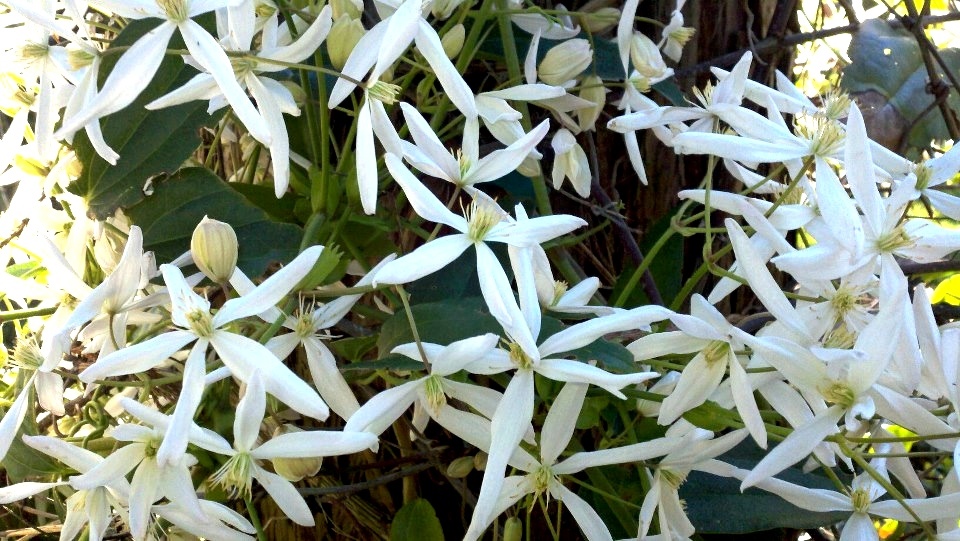
White Clematis Ligusticifolia

SMART North Santa Rosa
The North Santa Rosa SMART (Sonoma Marin Area Rail Transit) station has generated a lot of fiscal concern and political controversy for several years. The original Jennings Park site proposal allocated 9.8 acres for this project and is located at the former Northern Pacific Railroad right-of-way in Santa Rosa. This potential depot site is extremely desirable because it would provide more parking spaces for regular commuters, is situated in a growing residential area and will be accessible to the Santa Rosa Junior College if future development plans materialize to add a bicycle pedestrian bridge over highway 101 nearby. Unplanned additional construction costs and dwindling resources are weighing at the core of this placement issue and stalling both SMART and City Council representatives to ultimately commit to a final location. The second depot site south of Jennings at the Guerneville Road crossing could also be selected as the future option. The buildings and property adjacent to the crossing could be acquired and developed and the existing road crossing improvements were previously completed which makes this option financially more attractive than the proposals for the Jennings crossing area. The downside of course at Guerneville Road is the limited parking. The ongoing revitalization of Coddingtown mall area at Guerneville Road/Steele Lane includes 60 + new stores showcasing a new Whole Foods superstore. The ongoing impressive large scale renovation construction of the malls south wing has also given this outdated-aging shopping mall a fresh start and a promising commercial economic future.
Phase 1 rail line planning discussed and shared on the SMART homepage indicates that the new rail service will begin in Santa Rosa, most likely from this Northern location. The undecided rail stop would sequentially be #4 out of the total 14 planned beginning at Cloverdale -> Healdsburg -> Windsor -> then North Santa Rosa. I’m anxiously waiting to hear the outcome of this temporary snag and this location is key since it will support the interim turn around tracks for the North end of the rail line. I also noticed this week that one of the Guernevile Road rails at the construction area was marked SMART#4. If that is a subtle hint or clue of progress and new developments, maybe the decision has been made, unofficially! ;o)
Santa Rosa – Jennings depot
http://www2.sonomamarintrain.org/index.php/stations/santarosa
Coddingtown mall
http://www.simon.com/mall/coddingtown-mall
Sonoma-Marin Area Rail Transit (SMART) Phase 1 chart
http://sonomamarintrain.org/
Related articles: Jennings / Guerneville Rd. crossing costs & issues
Tough to make a SMART decision at Jennings Avenue crossing
By KEVIN McCALLUM – THE PRESS DEMOCRAT Published: Tuesday, November 13, 2012
http://www.pressdemocrat.com/article/20121113/ARTICLES/121119804
Santa Rosa OKs $200,000 study of rail underpass
By KEVIN McCALLUM- THE PRESS DEMOCRAT Published: Tuesday, August 14,2012
http://www.pressdemocrat.com/article/20120814/ARTICLES/120819763
Santa Rosa to consider Jennings Avenue undercrossing
By KEVIN McCALLUM – THE PRESS DEMOCRAT Published: Monday, August 13, 2012
http://www.pressdemocrat.com/article/20120813/ARTICLES/120819815
SMART committee selects Guerneville Road site for train station
By BOB NORBERG – THE PRESS DEMOCRAT Published: Wednesday, June 2, 2010
http://www.pressdemocrat.com/article/20100602/ARTICLES/100609916/1033/news?p=1&tc=pg
SMART station planning
White paper No 12 May 2008
http://www.docstoc.com/docs/84857028/SMART-Station-Planning
 macebergmann